
SW Virginia · NE Tennessee
Forestry Mulching
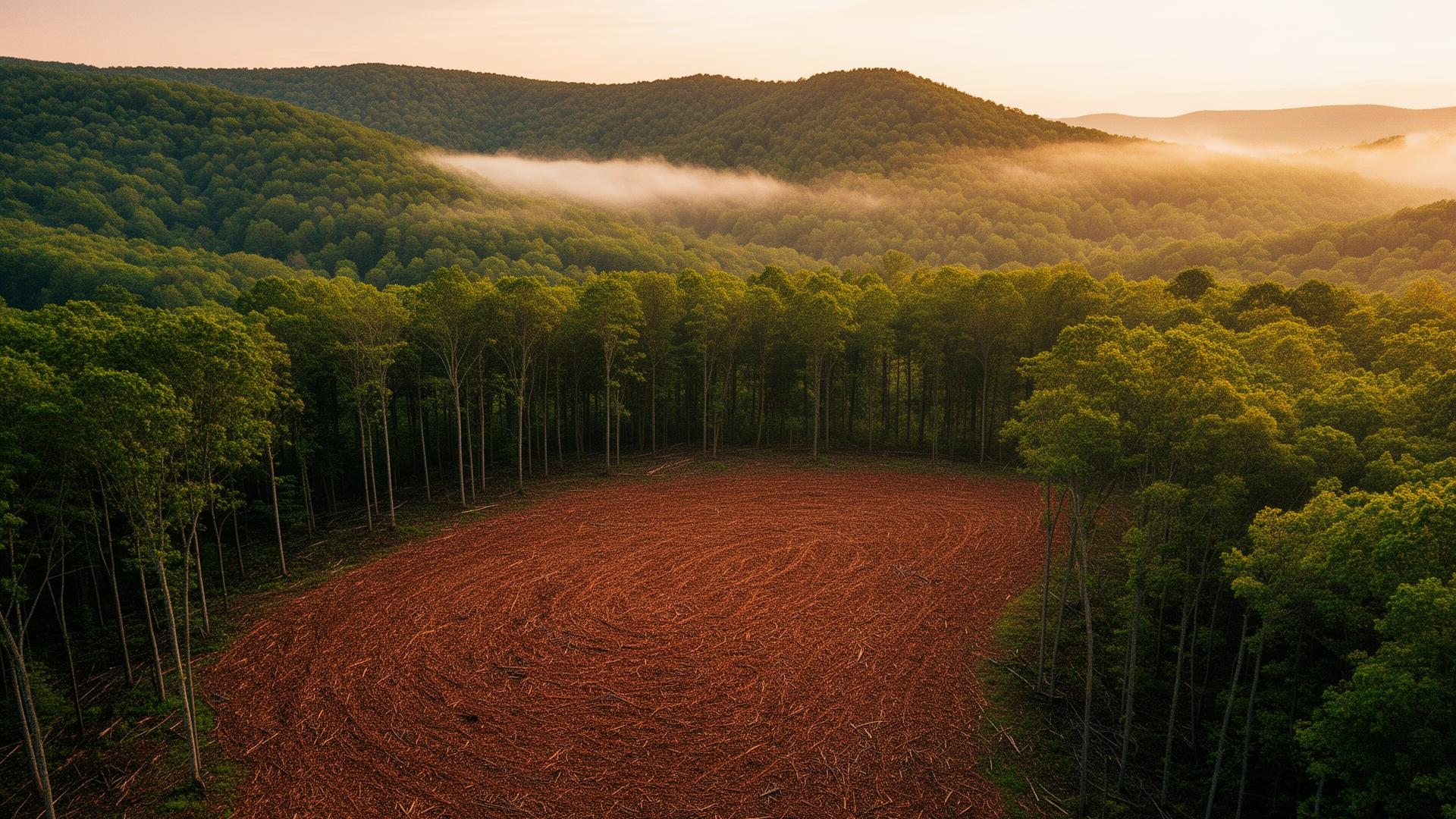
Single-pass clearing with a track-mounted mulcher — brush, briars, and small trees ground into a mulch layer right where they stand, with no piling, burning, or hauling.
The problem
Why It Keeps Happening.
Ground here closes in fast. A pasture edge you stopped bush-hogging a few years ago is briars and cedar now, fence lines disappear, and the woods creep toward the house a little more every season.
Traditional clearing makes that worse before it makes it better — dozer work scrapes off topsoil, leaves piles to burn or haul, and tears up ground you then have to repair.
Most people also wait too long. Stems that a mulcher would have taken in one pass become trunks, and what was a one-day job turns into a clearing and grubbing job.
Often paired with land clearing, brush & fence line removal and building & equipment pads on the same visit.
What we do
Our Process.
- 1
Walk the property with you, mark what stays and what goes, and flag anything hidden in the growth.
- 2
Confirm mulching is the right tool for what you plan to do with the land — and say so if it is not.
- 3
Set up access and work from the reachable side in, so the machine is never trapped behind material.
- 4
Mulch brush, briars, vines, and small trees in place, cutting material flush at grade.
- 5
Spread the chip layer to an even, walkable depth instead of leaving windrows and piles.
- 6
Walk the finished area with you, smooth any ruts, and point out where a follow-up pass will be needed.
What to expect
What Mulched Ground Actually Looks Like.
This is worth being plain about, because it is where most people are surprised.
Forestry mulching leaves a layer of wood chips on the ground with stumps cut flush at grade. It does not leave bare dirt. It is not a graded surface, and it is not ready to be planted, tilled, or built on without further work.
What it gives you is land you can walk, see across, and manage again — fence lines you can reach, pasture edges you can reclaim, and acreage that is usable instead of impassable.
The root systems stay in the ground. That is what makes mulching fast and easy on the soil, and it is also why some regrowth is normal, especially on species that sprout from the root. Mulched ground usually needs a follow-up pass or a maintenance cut to stay open.
If you need bare, plantable, or buildable ground, that is clearing and grubbing, not mulching. Tell us what the land is for and we will tell you which one you actually need — see land clearing.
What it costs
What It Costs.
Every estimate is free and done on site. We walk the property, look at the actual conditions, and give you a written price for the job — not a guess from a satellite photo.
No surprises
What's Included / What's Extra.
Included in the job
- Site walk and work boundary marking
- Brush, briar, vine, and small-tree mulching
- Stems cut flush at grade
- Mulch spread to an even layer on site
- Working around fences, lines, and structures
- Rut smoothing and site cleanup
Quoted separately
- Stump grubbing and root removal
- Hauling material off site or dumpster costs
- Burn permits and burning
- Large-timber removal and merchantable logging
- Finish grading, seeding, and pasture establishment
- Follow-up maintenance passes
- Rock excavation
Where we work
Our Service Area.
Washington, Smyth, Scott, and Russell counties in Virginia.
Sullivan, Washington, Hawkins, and Greene counties in Tennessee.
Including Abingdon, Bristol VA, Bristol TN, Blountville, Kingsport, Johnson City, Damascus, and Glade Spring.
Questions
Frequently Asked.
Free estimate
Ready To Open Up Your Property?
We serve Southwest Virginia and Northeast Tennessee. We'll walk the property and give you a written price.
Or call us directly — (423) 484-8960